A Parachutist Series
What’s going on with that magic backpack, anyway? How does it work? What are all those moving parts? Every skydiver reaches a fundamental understanding of their gear when earning their A license, but even very experienced skydivers can be intimidated by what’s going on inside their rigs. One of the best ways to stay safe in this sport is to know your gear inside and out, so jumping into the world of rigging makes sense for every skydiver. But how do you get started? What good—and bad—habits can you look out for now? And who should you look to for help? FAA Designated Parachute Rigger Examiner and packing-mat rock star Shauna Finley is here to answer these questions and more!
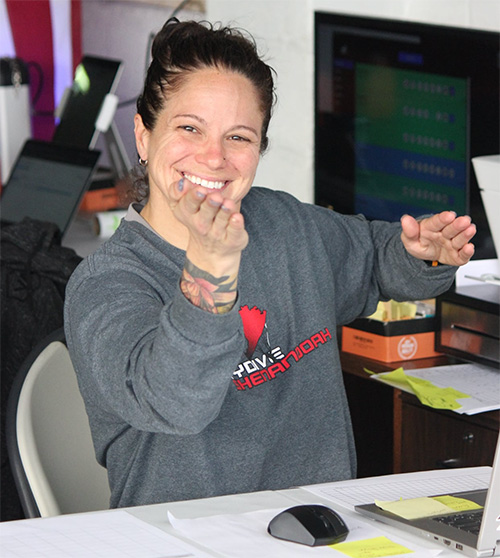 Photo by Leslie O'Regan.
What first got you interested in rigging?
I became good friends with my DZ’s rigger, who ran our loft. She was so patient and showed me how my gear worked, and it just stuck with me. I also had some trust issues, and if something went wrong with my gear, I didn’t want to blame anyone other than myself. No one needs that on their shoulders in case of a mishap.
I just got my A license, but I’m interested in becoming a rigger one day. What should I be doing now?
Slow down. I remember trying to do everything after I got my license. I wish I would have slowed down and steadily become really good at one thing at a time instead of “proficient” at many things. I feel like sometimes now I’m behind the power curve, trying to master skills that I should have mastered years ago.
What mistakes do people make most often with their own personal rigging?
They don’t ask questions, and when they don’t, very basic information is lost and not passed on. People seem to feel that once they start “advancing” in their skydiving “careers,” they can’t ask questions even about basic stuff. That mentality can get you, or worse, someone else, killed.
What was the hardest lesson you had to learn as you started rigging for others?
I think I’ve always done a good job at holding myself accountable for mistakes I’ve made, but when I started rigging for others, I really had to learn how to address mistakes made by other riggers without disparaging their names and reputations. Having good communication skills when trying to provide feedback after an error is extremely important, in my opinion.
What’s the best rigging advice you’ve ever received?
If you don’t know, ask. Also, if you’ve ever been asked a question and don’t readily know the answer, it’s OK to say that and then follow with “I’ll find out for you.” People have more respect for you when you do that as opposed to just winging it in an area of the sport that should not be winged.
What resources exist for jumpers looking to learn about rigging?
There are several reputable lofts throughout the U.S., and I’m sure they would love the baby jumper to walk in to watch their own repack, ask gear questions and learn. Manufacturers are also great resources for jumpers wanting to know more about their gear—its limitations and how it works. You don’t need to be a rigger to call them either; they love to answer questions and talk about their specialties.
What do you know now that you wish you’d known earlier?
How hard it is to charge friends for rigging services and to actually set boundaries with a life/work balance.
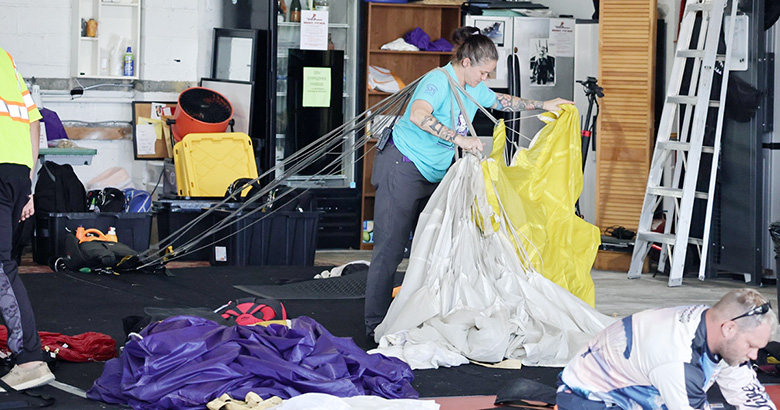
Photo by Glenn Garasic.
Why should everyone be interested in rigging?
If nothing else, it teaches you how your gear works and helps prevent gear fear. It’s also a great way to geek out with others in our sport!
What gear advice do you think everyone should hear?
Know where to pull up your owner manuals from the manufacturers and then actually read the manual. Also, I think a very dangerous habit is when jumpers crowd-source their gear and rigging questions. There are so many unqualified people out there who shouldn’t be giving advice to someone else looking for knowledge.
Rigging can be intimidating to a rookie (or even an experienced) jumper. How long did it take you to feel like you knew what you were doing?
I’m learning every day about new rigging techniques and how to do things. There are so many different ways that certain things can be done. When you feel like you’re done learning and don’t want to ask any more questions, it’s time to quit because you’re going to get yourself, or someone else, hurt.
What are some of the ways that being a rigger has benefited your skydiving career?
I had some very serious gear fear at the beginning, and once I became a rigger it was like opening a new educational book. I felt more confident when I jumped because I understood how the gear worked, and I also felt more confident as an instructor when a student asked me gear-related questions. Again, I would geek out on manuals and really made it my mission to understand gear and how it should be properly maintained.