In mid-November 2025, more than 50 skydivers, riggers, camera flyers, ground crew and support staff converged on a remote patch of desert 20 miles east of Skydive Arizona locally known as Area 51. Their mission was unusual, even by skydiving standards. Over five days, the crew engineered, modified, then dropped more than 120 objects of all shapes and sizes, turning the desert into a week-long experiment in creativity, engineering and high-skill flying.
The event, called Guardians of the Drop, grew out of Konstantin Petrijcuk’s long fascination with photos and videos from the legendary Junk Days at Skydive Arizona in the late 1990s and early 2000s. Those rare, once-in-a-blue-moon events left a lasting impression. For Petrijcuk, watching everyday items transform into skyborne projectiles was electrifying. “I was beyond amazed seeing objects fly in freefall,” he recalled. “I wanted to bring that feeling back—but bigger, better and more engineered.”
Over the course of the event, the group completed 28 loads, dropping 71 large objects and 50 smaller ones. Objects ranged from familiar skydiving oddities to elaborate freefall creations such as a shopping cart, Christmas tree, tandem bike, several couches, a vending machine and even a golf cart. Before anything left the aircraft, each object underwent detailed analysis for stability and fall rate, then was weighted, reinforced and modified to survive freefall. Teams welded on handles, removed sharp edges and stripped away loose components so every object could withstand an average 160-mph descent.
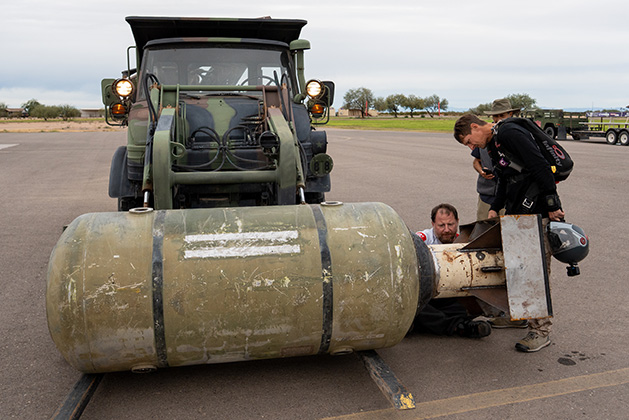
Photo by Nathan Roth.
The People Behind the Madness
A remarkable team made the event possible: 28 participants, six camera flyers, 10 ground crew members, six event staff, two pilots, two riggers and two remote support crew. Key organizers included Sara and Steve Curtis, Petrijcuk, and Dalton Swan, with major logistical help from the entire Skydive Arizona team. Sponsors included Airtec CYPRES, Arizona Arsenal, Black Swan, Credova and SSK Industries.
SSK Industries played a larger role than a traditional sponsor. Beyond providing support, they collaborated closely with Petrijcuk on the technical side of the event, offering equipment, guidance, and expertise for mounting CYPRES units on several of the more complex objects. Their support helped ensure the success of many ambitious drops and enabled unconventional ideas to succeed.
Keith Senerchia, aka Mach Daddy, generously allowed the crew to use his property before, during and after the event. His large garage—filled with welding equipment, woodworking tools, electrical gear, machinery and piles of materials—became a chaotic, creative laboratory where dozens of skydivers worked side by side for days. “His place was chaos,” Petrijcuk said. “Tools everywhere, supplies disappearing, everyone tinkering on something. He never stopped smiling. He can fix anything and was unbelievably supportive.”
Another essential force was Shawn Hill, president of Skydive Arizona, who flew every load. With decades of experience and a deep respect for aviation safety, Hill brought calm clarity to every decision. He approached each challenge with enthusiasm, maintained steady judgment and kept safety at the forefront.
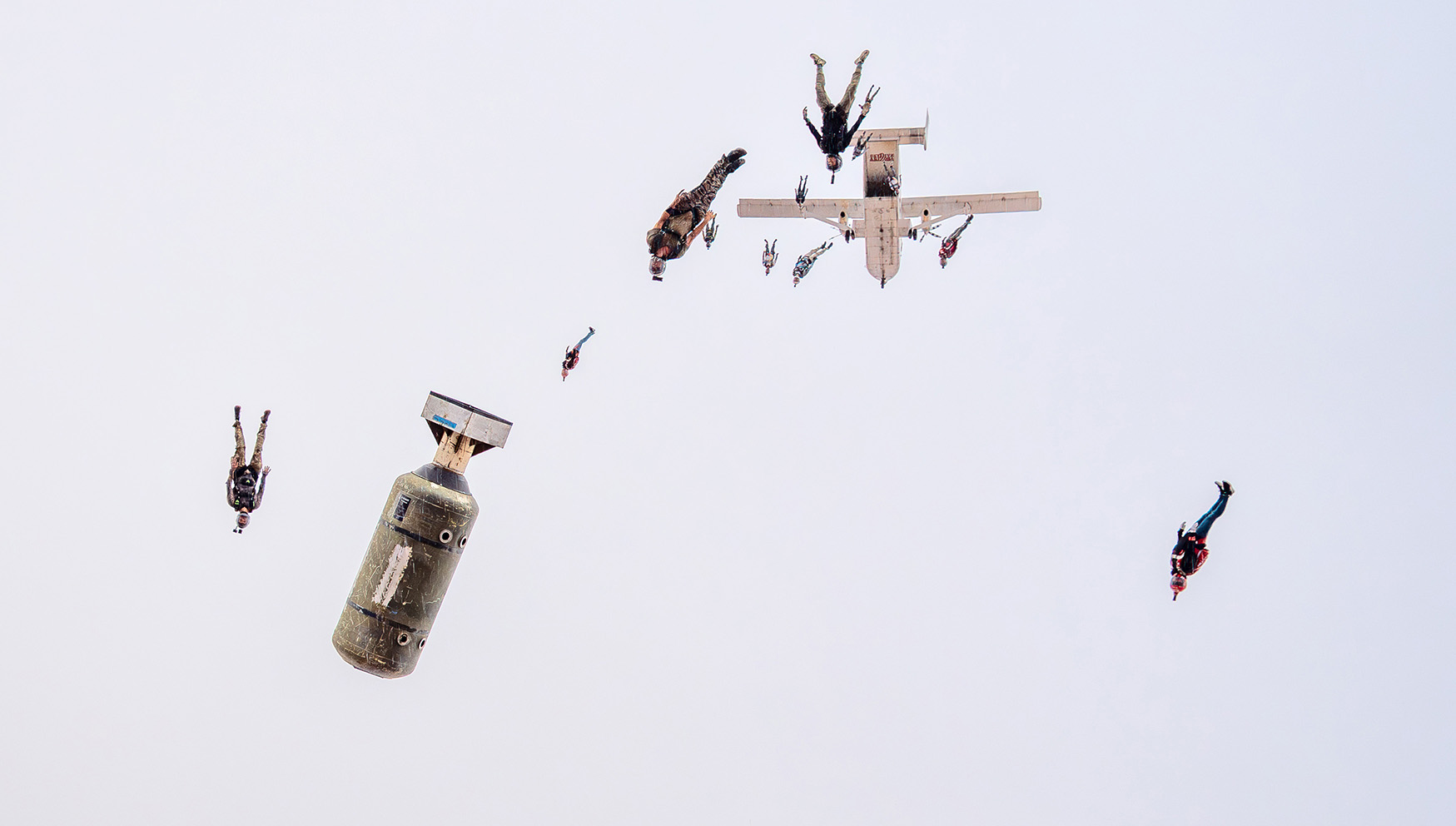
Photo by Nathan Roth.
The Heart of the Event
At its core, Guardians of the Drop was a playground for highly skilled adults—a chance to combine advanced flying with pure creativity, problem-solving and the shared thrill of embracing the unknown. Every jump brought something new: unusual objects, unique visual concepts and evolving goals based on what participants wanted to create in the sky. Sometimes flyers aimed for freefly speeds; other times precise speed didn’t matter. The atmosphere encouraged constant curiosity: What unusual thing can we safely make fall next?
Despite a rough start with rain and heavy clouds, the group stayed patient, adapted and made the most of every clear window once the skies opened up again. Underneath it all was a deep sense of teamwork. “Watching my friends come together to help everyone succeed and root for each other was the best feeling in the world,” Petrijcuk said. “It was beyond fulfilling.”
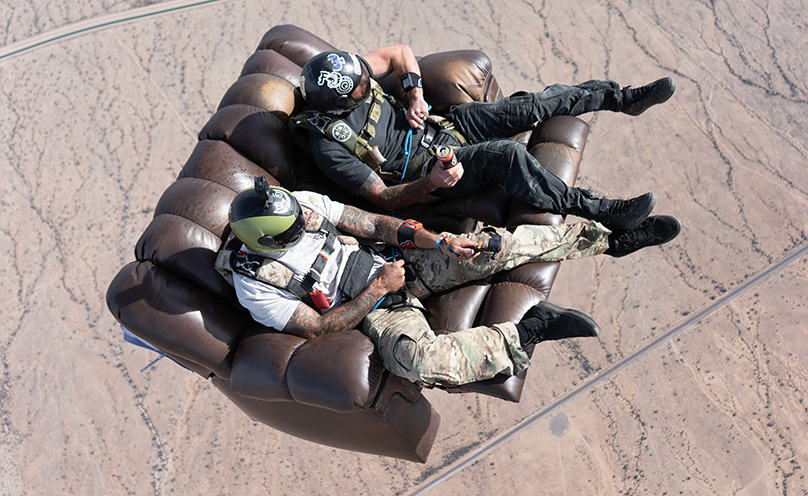
Photo by Joe Jennings.
Memorable Moments
Among countless memorable drops, one stood out: the golf cart. After significant preparation, it fell beautifully—straight, stable and surprisingly elegant. For Petrijcuk, it represented everything the event was meant to be: bold, ridiculous, technical, creative and joyful. “The golf cart drop was one of the many highlights,” he said. “It flew really well. Watching people enjoy the weirdness of it all—that was the moment I knew this event was exactly what I wanted it to be.”
Other favorite parts included the late-night preparation sessions, the communal problem-solving, and the constant stream of laughter as the team worked to make objects “freefall friendly.” Each load brought something new and unexpected—sometimes delicate, sometimes oversized, sometimes just delightfully strange—all of it adding to the sense of shared discovery.
A heavily weighted teddy bear, fitted with a CYPRES, flew head-down better than most humans. The group also rigged the empty shell of an old military-style bomb, weighted so it would fall at the right speed, and mounted a CYPRES to safely deploy a round parachute.
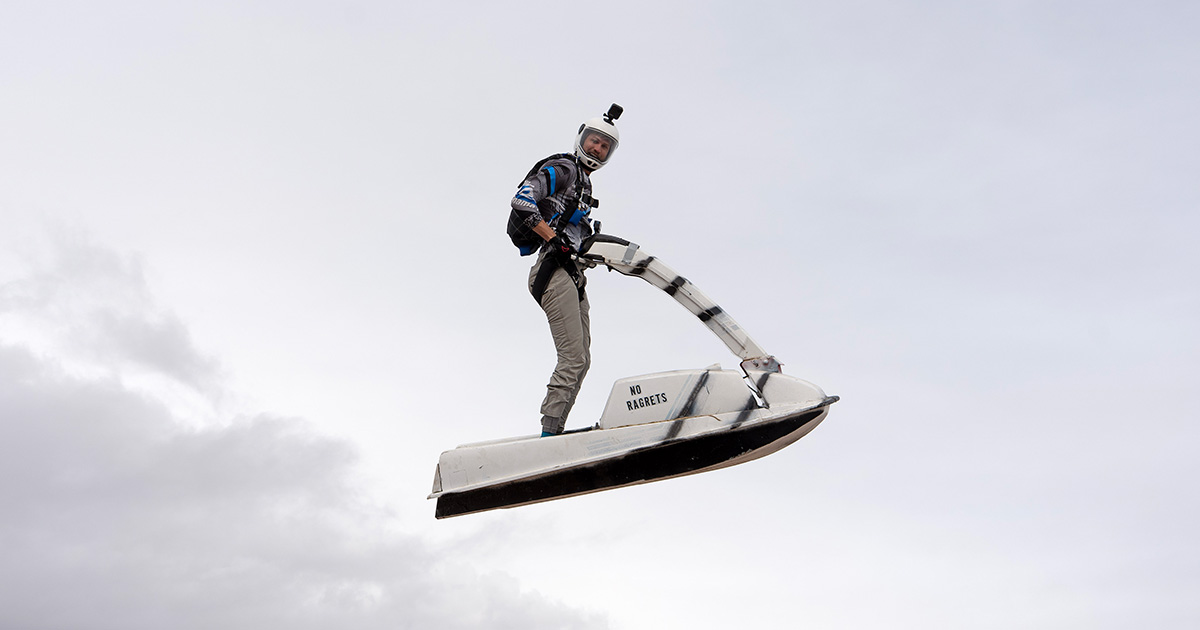
Photo by Joe Jennings.
Challenges, Wins and Lessons Learned
A project this ambitious came with its own set of challenges. Paying for aircraft by the hour added financial pressure. Managing a large group with unpredictable objects was complex. Everyone worked together to carefully calculate how to engineer each object. Ultimately, all solutions were educated guesses. Once an object left the aircraft, there were no second chances—except for the few equipped with CYPRES units. Some teams used the wind tunnel for testing, but the truth of an object’s performance only revealed itself in the sky.
Weather added another layer of difficulty, forcing constant adjustments. Yet these challenges ultimately strengthened the experience. “Some of the hardest aspects of planning and preparation are what made it all so satisfying and fun,” Petrijcuk said. “People learned a lot. This event gave everyone useful knowledge for future ones.” Best of all, everyone was safe, and the energy throughout the event remained positive, creative and collaborative.
By the end of the week, participants were already asking about the next installment. Petrijcuk’s vision for the future is clear: he hopes to incorporate even larger objects, add dawn and dusk jumps with pyro, encourage more creativity, and explore an even wider range of freefall ideas. “It was adults acting like highly professional children,” he said. “That’s the magic of it. And I want to keep that going.”
Guardians of the Drop was more than a skydiving event—it was a reminder of what happens when talented, passionate people come together to create something technical, playful, unusual, and unforgettable. It honored the spirit of old-school Junk Days while pushing the concept into a new era. For everyone who was there, one thing is certain: This was only the beginning.
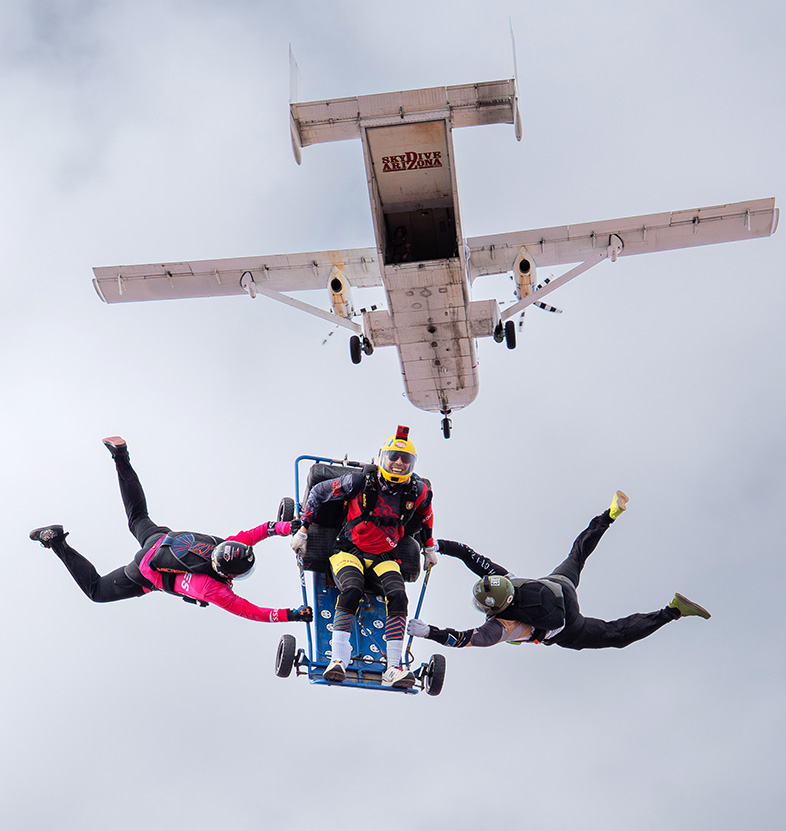
Photo by Nathan Roth.
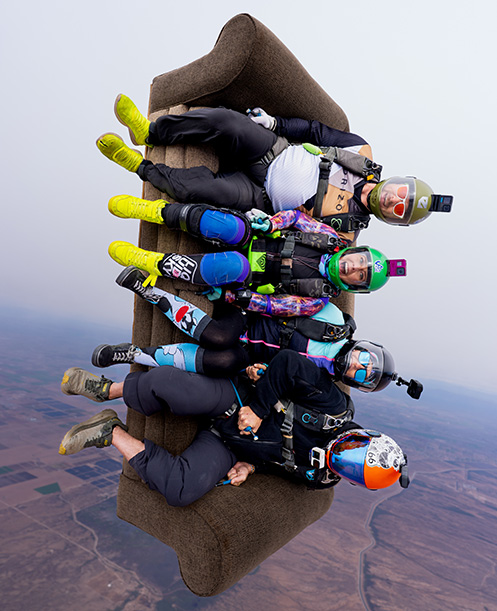
Photo by Mark Kirschenbaum/Hypoxic.
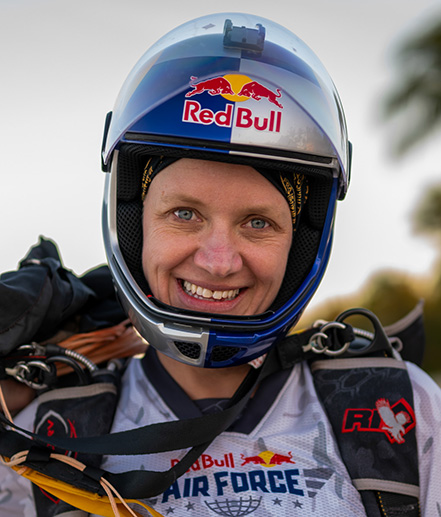 About the Author
Amy Chmelecki, D-24579, has made more than 20,000 skydives since her first in 1995. She serves as a National Director on the USPA Board of Directors and is a member of the Red Bull Air Force and the Highlight Pro Skydiving Team.